

The Strokes - Reality Awaits
Rock – Released July 24, 2026 – 9 songs, 42 mins
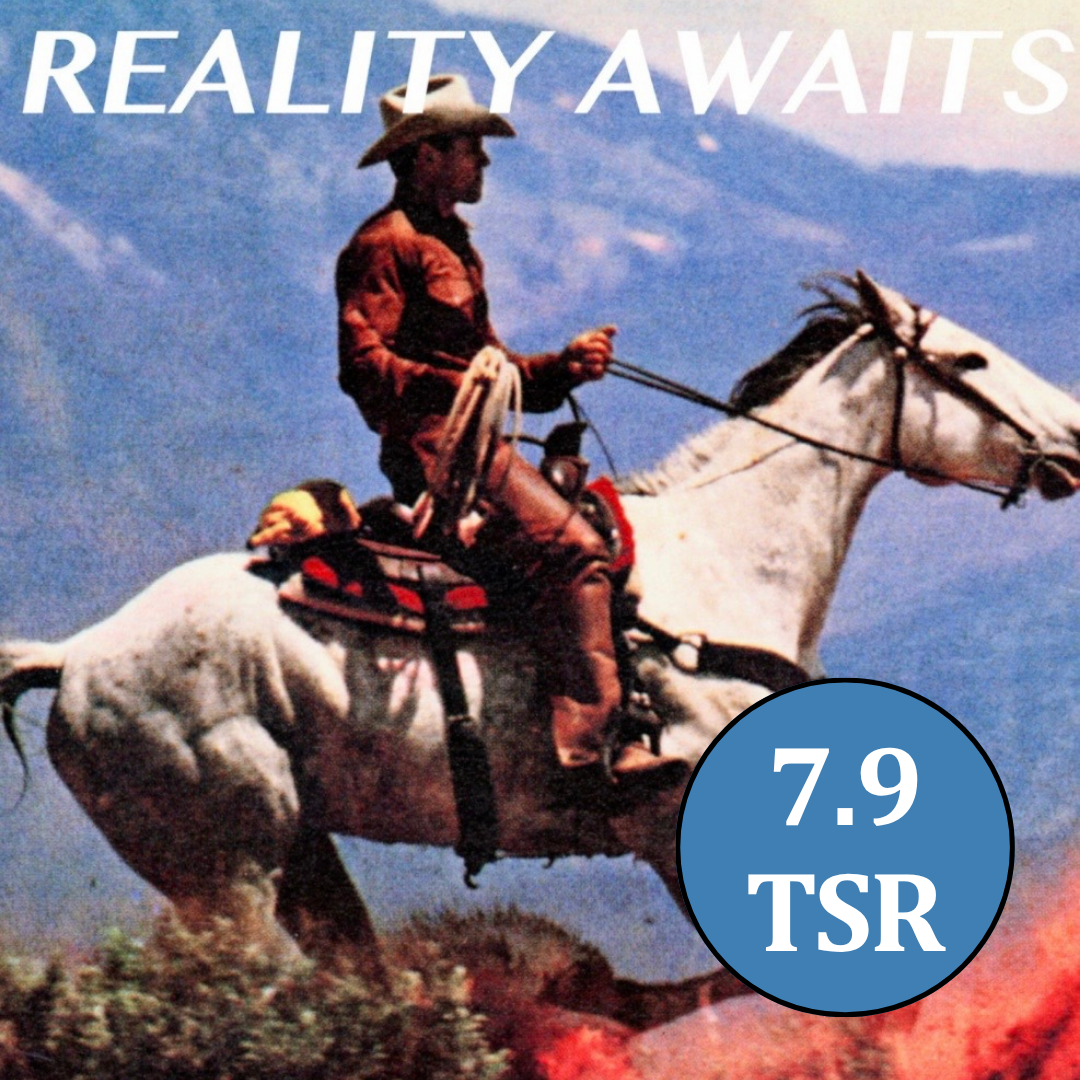
REID
How fitting is it that on the 25th anniversary of The Strokes’ triumphant debut album, Is This It (2001), we at TSR unveil our review of their seventh release, Reality Awaits. The highly anticipated follow-up to their Grammy-award winning effort for Best Rock Album,The New Abnormal (2020), has been out less than a week and the noise has been deafening. I chalk that up to three reasons. The first is obvious; these guys are rock legends. Whatever your opinion of their discography, you must appreciate that Julian, Nick, Albert, Nik and Fab have managed to hold it together all these years. Personal growth, side projects and beefs aside, the guys know they have something special with this group. Second, I’ve been a big fan for a long time and my algorithm is on absolute panic. I’ve seen every opinion from Vince Staples to Fantano to Johnny Basement with his thirteen followers. The pros and cons of this technology is scary but that’s a conversation for another day. The third is the controversy over the use of the auto-tune effect on Julian’s vocals. That’s where I’ll begin.
Yes, Julian’s vocoder has been a lightning rod of debate since the release of the first two singles and has grown exponentially upon the full release. To anyone paying attention, this was inevitable. Julian has been toying with these vocal effects since his collaboration with Daft Punk on Instant Crush (2013), a single that is celebrated by even his toughest critics. Since then, he has used it in just about every song from his side project, The Voidz. As a long time fan of The Strokes, I always loved that there was a line drawn in the sand between the two bands on this effect and I can’t lie, I dreaded this exact moment. I’ve always had an issue with it because I just appreciate the hell out of hearing someone’s pure vocal. And Julian’s is excellent! I mean I’m still getting Facebook status memories pop-up from 15-20 years ago of me bitching about auto-tune. True story. So when I first heard Going Shopping, my reaction was ‘it’s catchy, but…’. Then I heard Falling Out of Love and I was legitimately upset. I was clutching my Is This It vinyl with tears in my eyes singing the lyrics to Someday ‘in many ways, we’ll miss the good ol days’. This can’t be it, right? I was in denial, didn’t want to accept it. I kept going back to it hoping something would change and voila, it did.
In an interview with the French TV show Quotidien, Casablancas was asked about the use of auto-tune and he had a lot to say but one thing that stood out to me was ‘its not based on tone, it’s more based on melody and harmony…’. I think I was so caught up in my general distaste for it that it overshadowed how well it actually fits with the simple chord progression on the song. Add to it that it may be one of the more beautiful and honest songs he has ever written about admitting the end of a flawed relationship. By the way, I think releasing this as the second single was by design. It was released to condition fans on what we should expect and it was executed to perfection. Now I know what you’re thinking… This guy is a Casablancas-apologist, willing to shine a turd for his idol. That’s simply not the case. There are moments throughout the album that it rubs me the wrong way like the last minute of Psycho Shit for example. And there’s a lot The Voidz I simply do not enjoy. My message to you is it took me a few weeks for it to click. The album has been out for 6 days. Give it some time.
Anyway now that I’ve addressed the topic du jour and overwhelmingly the most negative thing I keep hearing on the record, let’s talk about the rest. The Strokes have always been willing to experiment with their sound and that does not stop at the vocal. Reality Awaits picks up where The New Abnormal (2020) left off with every song greater than four minutes except for two. This is a long way from the early years and shows the band are no longer content to let good ideas die as they’d prefer to allow them to grow into something greater. This approach presents a wide array of soundscapes from earworm hooks like Lonely in the Future, Going to Babble On and Going Shopping. Albert and Nick’s signature dueling guitars shine throughout, particularly on Dine N’ Dash as that melodic vs. distorted arrangement paired with Julian’s signature detached vocal felt like an instant classic the moment I heard it. Psycho Shit is a slowly building epic with a loud message on warlords. They go drumless on Liar’s Remorse and other than a meandering chorus that doesn’t hit for me, it’s another fun addition to the album with sonic qualities unlike any other. Fruits of Conquest hits you with a bit of groove and dare I say Tyrants of the Mellow Moon has some Radiohead in it? That opener has Faust Arp written all over it and the guitar bares similarities to Paranoid Android. What a crossover!
Alright if you’re not already tuned out by now, I’d just like to add that the thematic content on this record is also great. There’s plenty to chew on from war criminals, consumerism and failing relationships. I’d like to highlight my early favourite, Lonely in the Future, because I just think it’s so clever. The album’s lyrics centre on little jabs at the Weeknd, Harry Styles and John Legend for lacking originality and copying fads and trends from others. This may feel a bit cheeky from a rock band but Casablancas writes the song about the future, claiming they are on the right side of history in attempting to continuously push the boundaries and grow artistically. Fast forward to where we today with Reality Awaits. Fans and pundits may not love it, yet. If they’re anything like me, they’ll get there.
Reality Awaits is the seventh studio album from a group who has never been afraid to take chances. The Strokes continue to build on their artistic integrity, once again focusing on their own creative growth over industry expectations. The result is a polarizing assortment of songs that I’m confident will age well.
Overall Rating: 8.5/10
Favourite Song: Lonely in the Future
LUNDI
“I think the dance floor is dead! Now we’re making rock music…” Damn, wrong artist, that’s next week. This week, however, we are tackling that very genre, albeit with a band that’s far from a first-timer in the world of guitars. Despite debuting just this century, The Strokes have already cemented themselves as modern legends. But they aren’t here to coast on nostalgia or appease an established fan base. They’re here to deliver impactful, forward-thinking, expansive music that deserves a place alongside the rest of their catalogue. Reality Awaits is a lesson in growth. Let’s dive in.
First, an objective observation. The Strokes continue to evolve, which is something very few of their ‘90s and 2000s alternative and indie rock peers can honestly claim. I’ve said it before and I’ll say it again: fan-service records are some of the worst collections of music imaginable. If you’ve already built a headlining set of hits, what’s the point of making the same album over and over again? Tom DeLonge and John Frusciante’s highly anticipated returns couldn’t save Blink-182 or the Red Hot Chili Peppers. Modern Foo Fighters and Metallica records have become uninspired slop. Please, Liam and Noel, just stick to the oldies. So, for whatever it’s worth, and to me it’s worth quite a lot, a band genuinely attempting to evolve deserves praise, regardless of whether the final product aligns with your personal taste.
Luckily for me, this album absolutely hits the mark, and that is, above all else, surprising. The Voidz are easily one of my least favourite bands going, and Julian Casablancas’ artistic muse often felt like it was beginning to seep into the cash cow that is The Strokes. Instead, Reality Awaits finds the New York outfit simply taking on a new form, one that embraces their strangest, loosest, most free-flowing music to date. The instrumentation and song arrangements are sublime, further proving my long-held theory that having two guitarists makes everything better. Nick Valensi and Albert Hammond Jr. spend 42 minutes trading riffs, melodies, and licks in a constant duel for superiority, bringing the very best out of one another. Anchoring the pair, Fabrizio Moretti delivers one of the finest drumming performances of his career, making beautiful use of his hi-hat alongside traditional kick-and-snare patterns. Whatever your feelings toward the band’s frontman are, denying that these musicians remain leaders in their craft feels like a futile exercise.
That frontman, however, is where the complaints often begin. Lyrically, Julian Casablancas can leave a lot to be desired, particularly for someone like me who values strong songwriting. I will never call him a poetic savant, but over the years his absurdist, fragmented, and often goofy style has grown on me considerably. At times it still drifts into mailed-in nonsense, yet he almost always writes in a way that invites listeners to solve a puzzle rather than simply consume a story. It is definitely curious that someone so politically and socially outspoken can often say so little within his songs. Even so, lyricism has never been what made The Strokes great, and it isn’t what we’re here for now. He’s consistently passable, occasionally very good, and sometimes genuinely great. Whatever he’s doing, it clearly works.
Now we get to the album’s biggest talking point, the one nobody can seem to stop arguing about. Auto-Tune. On one hand, we probably shouldn’t be surprised. This is the same band that famously ran Casablancas’ vocals through guitar amps on multiple records. On the other, there are moments here where the pitch correction borders on abrasive. Thankfully, as the album settles in and its broader sonic palette and vocal spectrum begins to reveal itself, I found myself enjoying the approach far more than I expected. There are certainly occasions where I wish Rick Rubin had stepped in and softened vocals that sound like they’ve come straight out of a vocal decoder, although it isn’t exactly shocking that he seems to have lost his pulse on modern rock production. Within the context of the album, though, I’m ultimately quite fond of the decisions despite the moments where it becomes excessive. It’s another example of the band choosing exploration over comfort. More often than not, that gamble pays off. It’s just a shame Julian couldn’t have convinced Daft Punk to return to the studio and recreate the magic of Instant Crush. We might have been talking about an all-time classic.
Reality Awaits delivers nine songs ranging from very good to exceptional, even if a few questionable moments remain. The album may begin and end with two of its weaker cuts, but the run from Dine N’Dash through Going Shopping stands among the most enjoyable stretches of rock music I’ve heard this decade. At various points throughout the week, every one of those five tracks claimed the title of my favourite. Even if this ultimately lands as only the third or fourth best The Strokes album, that’s simply a testament to how remarkable their catalogue has become. Fittingly, the day this review is published marks 25 years since Is This It. Revisiting that debut, you can still hear the same band, one that has matured gracefully, embraced the modern musical landscape, and somehow retained its unmistakable identity throughout. Kudos to that.
Reality Awaits sees one of this century’s greatest bands continue to put the music industry on notice with a free-flowing, delightfully odd collection of songs that feels perfectly at home within The Strokes’ identity while still sounding unlike anything else in their 25-year discography. It’s another reminder of just how much artistic value there is in embracing evolution rather than nostalgia. The Strokes prove that growing older as a band doesn’t have to mean endlessly pleasing an established fan base. Sometimes, the most rewarding path is simply continuing to move forward.
Overall Rating: 8.1/10
Favourite Song: Lonely in the Future
ROZ
For the first time in 2026, Too Sweet Reviews is diving into a mainstream rock album. Five years since TSR’s beaming review of their 2001 debut album Is This It and six years after their 2020 album The New Abnormal, The Strokes are back with their seventh studio effort. This band really does not require any sort of introduction, as their body of work and tenured acclaim speak for itself. Today we take a good hard look at Reality Awaits - and boy does it ever leave a strange pit in my stomach.
First and foremost, The Strokes are a legendary band and Julian Casablancas is an immense talent in all sense of the word - these are two inherent, undeniable truths. The group's longevity is a testament to these facts, and their ever-evolving sound further proves their ability to adapt and persevere against the ever-changing scene that they’ve navigated since the early 2000s. Musically, the band sounds as good as they ever have as they once again affirm their ability to create decedent hooks and airtight rock arrangements. I’m not using hyperbole when I say that Dine’N Dash may very well be my favourite song of 2026 up to now (and not just due to it being a much-needed cold splash of water in the face after the agonizing introductory track that is Psycho Shit). The entire band is at top form here on this track with airy chords, hard hitting percussion and crunchy guitar melodics driving an exceptionally catchy four minutes. The melody is only rivalled by the incredible performance from Casablancas and the expertly crafted songwriting that spills out of him. Raw yet delicate - it was a sound that promptly knocked me on my ass and completely changed my perspective on where the album may go, opposed to the over-processed mess that came before it.
It is here where we acknowledge the elephant in the room: the vocal processing. The issue I have is not with the actual use of autotune – hell, as an electronic music enthusiast I am of the firm belief that auto-tune is not only a stellar pitch correction tool but also a great artistic tool as well. The issue I have with Reality Awaits is how said tool was applied, and how the general absence of care, nuance, or direction adds up to give a messy, disordered, almost uncanny feeling across the album. While this could be hand-waved or simply blamed on the production choices and authoritative sway of the controversial Rick Rubin (who helms this project as he did with their previous album The New Abnormal), at the end of the day it is up to the band to make their own creative decisions and come to their own conclusions regarding where their record finally ends up. There is no excuse for Psycho Shit or Going Shopping; songs that I believe are two of the worst songs we’ve reviewed so far this year (the latter being the albums top single no less, driving me further into madness). I sit here and wonder whether this particular aesthetic was the true vision that the band had for this album - were the rest simply happy accidents? Surely not, as these negative traits were greatly dialed back for many (utilized perfectly on Falling out of Love for instance), and Casablancas was in top form for a majority of the tracks (save for the hilarious yet juvenile dig at the notorious music reviewer Anthony Fantano). The mind attempts to understand, to no avail.
Reality Awaits is nothing short of a rollercoaster; glints of greatness, moments of magic, and (what at times felt like) eons of anguish all bundled together to form what I can only describe as Casablancas’ version of Frankenstein’s monster. Shades of the bands earlier The New Abnormal get spliced with the futuristic sounds of The Voidz’ Like All Before You, with the result being an ambitious album held back by poor studio choices.
Overall Rating: 7.1/10
Favourite Song: Dine’N Dash